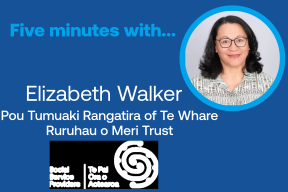
5 mins with Elizabeth Walker
Kia ora Elizabeth. Can you tell me who you are and what you do?
Ko Elizabeth Walker tōku ingoa. He uri ahau nō Ngāti Tūwharetoa me Te Rarawa I’m a social worker by trade, and very much by heart. I’ve worked in this sector for more than 20 years, beginning with 14 years at Child, Youth and Family before moving into the community and NGO space. I then spent eight years with the Anglican Trust for Women and Children, before taking up a secondment at Te Whare Ruruhau o Meri Trust. I’ve now been CEO here for three years.
Te Whare is a kaupapa Māori social service provider working predominantly in the family and sexual violence space across Kaitaia, Whangārei and Tāmaki Makaurau communities. We also support tamariki in the Franklin community through our school based, Kia Ora Ake programme.
What has kept you inspired about this mahi over your career?
Throughout my social work career, some of my most rewarding mahi has been in prevention and early intervention particularly alongside mothers who have experienced violence and are working incredibly hard to move themselves and their whānau toward safety and wellbeing. Witnessing that courage and determination has always inspired me.
As I’ve moved into leadership and management, that inspiration has expanded. I’m deeply motivated by seeing the development and growth of emerging practitioners, their hunger to learn, their commitment to doing good work, and their passion for supporting our most vulnerable whānau.
What has been your greatest professional joy?
That’s not something I’ve often paused to think about, but I’d say my greatest joy is knowing our services have played some part in the change journeys of whānau. It’s about seeing whānau discover, or rediscover, their strengths and potential, and then redirect their energy toward achieving it.
What makes this even more powerful is the impact on tamariki. A child can be born into incredibly challenging circumstances, with many risk factors stacked against them. But when a parent or caregiver takes genuine steps to change their situation and is supported to succeed, it can transform that child’s life outcomes and create positive ripple effects across generations. Knowing we’ve been part of some of those stories is incredibly rewarding.
In an election year, what is one key thing politicians could do to improve outcomes for the communities you serve?
I’m a strong believer in both early intervention and intensive intervention but we need resourcing across the full spectrum. Support is needed for those already engaged in high-intensity services, as well as for whānau who may end up there if we don’t act early enough. We can’t keep shifting funding from one end to the other. We need to invest at both ends, at the same time.
I also believe many of the solutions already exist within communities. Politicians and decision-makers need to not just listen to community voices, but truly hear and value the insights of those who live, work, and know these communities best.
What is one of the greatest challenges facing the sector at the moment?
Alongside entrenched issues like poverty and homelessness, there’s another challenge that quietly seeps into families’ lives: helplessness and hopelessness. I’ve always believed that helplessness breeds hopelessness. When whānau lose hope, they can begin to feel powerless. It becomes incredibly difficult to imagine or strive for a better future for themselves or their tamariki. I’ve worked with families who disengage from support because they believe nothing will ever change, that this is simply their lot in life.
How do you, as a practitioner and as an organisation, help restore hope?
As a kaupapa Māori provider, we believe strongly in the power of cultural connection. When whānau have a strong sense of identity, belonging, and connection to kaupapa, they are well equipped to strengthen their whānau. From there, they can begin setting goals and working toward them. Stronger, more resilient whānau contribute to safer communities. And when tamariki are growing up in nurturing, loving environments, supported not just by their immediate whānau, but by extended whānau and community, they are given the foundation to reach their full potential. I think we all want that, an Aotearoa of thriving tamariki.
Can you share some of your experiences as a kaimahi and kaiwhakahaere Māori in this sector?
It is both a privilege and an honour to be wāhine Māori working in a kaupapa Māori service supporting change journeys of whānau. Being trusted with people’s stories, often their most painful and personal experiences, is something I never take lightly. For whānau to have faith in us walking alongside them and supporting their aspirations is deeply humbling. I hope they feel we do this without judgement, and with genuine understanding.
I want to acknowledge our kaimahi at Te Whare, and other practitioners, advocates, and whānau navigators across the sector. Day in and day out, they sit with whānau, support their journeys, persevere through resistance and continue to show up, even when they’re told to go away. They are often the ones holding hope for families when that hope feels lost.